1916–1970
The Great Migration
movement of African Americans out of the rural Southern United States
Overview
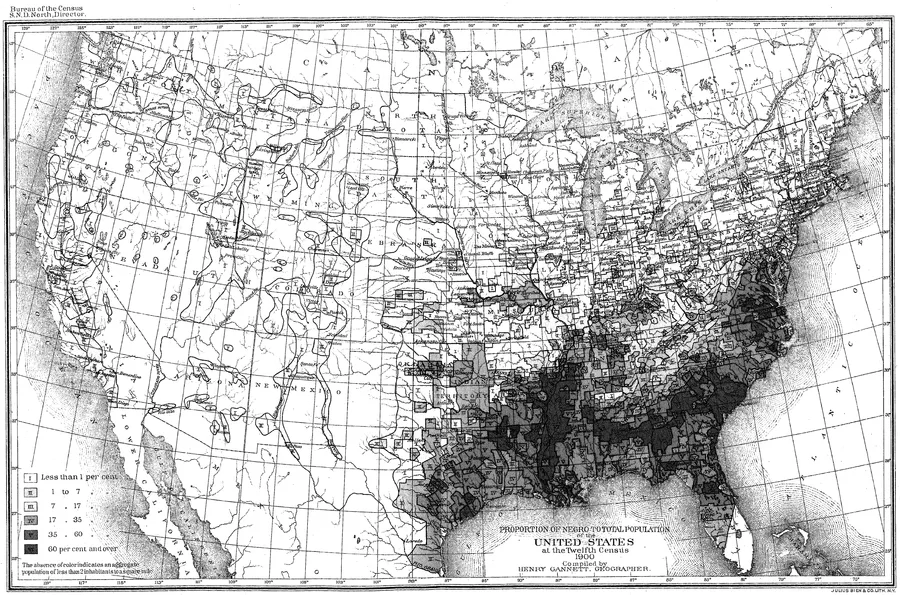
The Great Migration was the movement of roughly six million Black Americans out of the rural South to the urban Northeast, Midwest, and West between 1910 and 1970 — one of the largest and most rapid mass internal population movements in world history, driven substantially by Black Americans actively seeking escape from Jim Crow segregation, economic exploitation, and the ongoing threat of racial violence including lynching. Before this migration began, over 90 percent of the Black American population had lived in the South since the earliest national population records in 1780; by the migration’s end, just over half remained in the South while nearly half now lived in the North and West.
Building New Urban Communities
Migrants overwhelmingly moved to the era’s largest and most culturally influential American cities — New York, Chicago, Los Angeles, Philadelphia, Detroit, Cleveland, and Washington, D.C. — where they built new, culturally significant Black communities from the ground up rather than simply dispersing into existing white urban populations. This urban concentration transformed Black American life demographically: in 1900, only one-fifth of Southern Black Americans lived in cities, but by 1960 half did, and by 1970 more than 80 percent of Black Americans nationwide were urban residents, a total reshaping of where and how African American community, culture, and political power were built.
Push and Pull
Southern Black Americans left for documented, concrete reasons: segregation, convict leasing, the near-constant threat of lynching — an estimated 3,500 African Americans were lynched between 1882 and 1968 — and a sharecropping system that kept most Black farmers trapped in cyclical debt, worsened by agricultural crises like the cotton boll weevil infestations of the early 20th century. Northern factories pulled migrants just as forcefully: World War I cut off the flow of European immigrant labor that industry had relied on, opening thousands of previously unavailable jobs in steel mills, meatpacking plants, and railroads to Black workers for the first time. Historians generally divide the migration into two waves — roughly 1.6 million people between 1910 and 1940, and at least five million more between 1940 and 1970 — and note that the trend has since partly reversed, with a slower “New Great Migration” of Black Americans returning south in recent decades.
Legacy
The communities the Great Migration built directly produced some of the 20th century’s most significant African American cultural and political movements — Harlem’s renaissance of art and literature, Chicago’s blues and jazz scenes, and the urban political organizing base that would later drive the Civil Rights Movement all trace their roots to the migration’s demographic transformation of American cities. Historian Nicholas Lemann called it “one of the largest and most rapid mass internal movements in history” outside of forced displacement, and its true significance lies not simply in scale but in what migrants built once they arrived: new institutions, new art forms, and new political power in cities that would shape American culture for the rest of the century.
Related entries
More in Civil Rights